শনিবার, ০৭ নভেম্বর ২০২৬, ১১:৪২ অপরাহ্ন



1. Background*
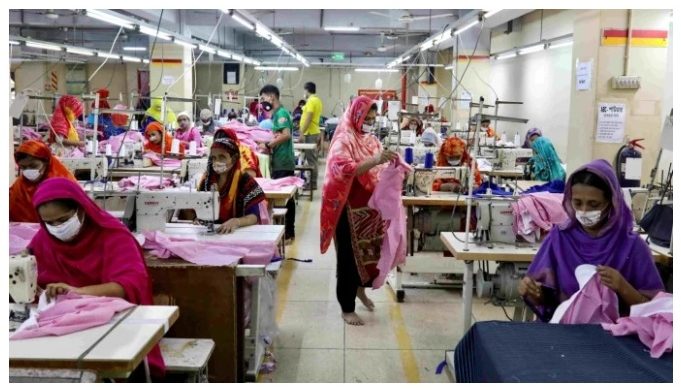
Bangladesh’s ready-made garment (RMG) industry is the country’s principal source of foreign exchange earnings. More than 80 percent of the country’s total export earnings come from this sector. The livelihoods of approximately 4 million people also depend on it. However, sluggish export growth, international competition, rising production costs, labour unrest and factory closures have raised serious concerns about the future of this industry.
*2. Concerns Over Export Growth*
In 2025, Bangladesh’s garment export earnings stood at approximately US$38.82 billion, recording a growth rate of only 0.89 percent. During the first 11 months of the 2025–26 fiscal year, exports declined by 3.41 percent compared to the corresponding period of the previous year. This trend raises questions about Bangladesh’s competitive position in the international market.
*3. Pressure from International Competition*
China, Vietnam, India and Cambodia are making significant progress in technology, production efficiency and product diversification. Bangladesh, on the other hand, still relies heavily on the production of basic garments. As a result, concerns are growing that the country may fall behind in the higher-value garment market.
*4. Factory Closures and Employment Risks*
According to information presented in Parliament in September 2026, more than 400 garment factories closed between July 2023 and June 2026. As a result, a substantial number of workers lost their jobs. Rising production costs, interest rates on bank loans, energy shortages and a decline in export orders have further complicated the situation.
*5. Labour Unrest and International Reputation*
A Reuters report published on 4 November 2026 highlighted issues concerning workers’ wage increases, working conditions and labour unrest. Ensuring workers’ legitimate rights is essential, while maintaining continuity in production and supply chains is equally important. Otherwise, Bangladesh’s position in the European international market could be adversely affected.
*6. Risks to Market Access and Trade Benefits*
The European Union is one of the major destinations for Bangladesh’s garment exports. As a Least Developed Country (LDC), Bangladesh has benefited from the EU’s Everything But Arms (EBA) trade preference scheme. Maintaining favourable trade access in the future will depend heavily on ensuring labour rights, improving working conditions and implementing international labour standards. Failure in these areas could negatively affect Bangladesh’s export competitiveness.
*7. Technological Backwardness*
The global garment industry is rapidly moving towards automation, artificial intelligence, environmentally sustainable production and digital management systems. If Bangladesh fails to keep pace with these developments, the risk of falling behind in production efficiency and international competitiveness will increase.
*8. Strategies for Overcoming the Challenges*
To address this crisis, the following measures are essential:
(1) Exploring new export markets beyond Europe and the United States.
(2) Investing in the production of high-value and diversified garments.
(3) Ensuring fair wages for workers and safe working conditions.
(4) Expanding the use of automation and modern technologies.
(5) Implementing effective reforms in bank lending, energy supply and port management.
(6) Taking special initiatives to meet international labour and environmental standards.
*9. Protecting and Modernising the Industry*
The current warning signs facing Bangladesh’s garment industry cannot be dismissed as an ordinary business downturn. This is a national economic challenge directly linked to the country’s export earnings, employment and overall economic stability.
Past success in international markets does not guarantee future prosperity. While competing countries are advancing in technology and production efficiency, Bangladesh must move swiftly towards reform and modernisation.
The warning signs are already visible. Unless effective measures are taken immediately, Bangladesh’s long-established position in the international garment market may become increasingly vulnerable. Therefore, protecting and modernising this industry must be made a national economic priority.
*(The author, Professor M. A. Barnik, is a professional defence analyst and a keen observer of international geopolitical developments.)*

সম্পাদক আল মাহদী; উপদেষ্টা সম্পাদক আল ফাতাহ হাবিবুল্লাহ
ঠিকানা : সাংবাদিক ভবন, বাসা নং ২২১/২২২ রোড়ঃ ৩৫ ব্লকঃ ট সেকশন নং- ৬ রূপনগর মিরপুর ঢাকা-১২১৬।