মঙ্গলবার, ১৩ অক্টোবর ২০২৬, ০৮:০৮ অপরাহ্ন

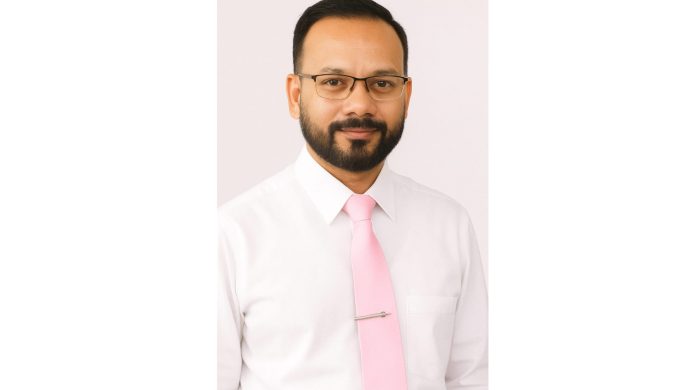

Tareque’s 31 Points: A Final Nail in the Coffin of Zia’s 19 Points and the ‘Nationalist Ideology’
—Professor M. A. Barnik
1. Introduction:
In 1978, President Ziaur Rahman laid the foundation of a political philosophy called “Bangladeshi Nationalism”—a revolutionary shift in the country’s ideological landscape. Grounded in religious and linguistic diversity, Zia envisioned a sovereign, self-reliant, and homegrown national consciousness. Complementing this vision, he introduced his “19-Point Program”, which outlined the roadmap for building Bangladesh’s state, society, and economy on a solid foundational principle.
However, towards the end of 2023, BNP’s Acting Chairman in exile, Tareque Rahman, announced his so-called “31-Point National Reconstruction Framework”, which effectively drove the final nail into the coffin of Zia’s nationalist ideology. Nowhere in the 31 points is the term “Bangladeshi Nationalism” mentioned. Instead, the entire framework leans toward a Western-centric, NGO-style administrative reform model.
—
2. Zia’s 19 Points: A Blueprint for a Dignified Nation-State
Ziaur Rahman’s 19 Points, in brief, emphasized:
(1) Respect for Islamic values
(2) Revival of national heritage and culture
(3) Emphasis on rural economy and agricultural productivity
(4) Prioritization of self-reliance and national interest
(5) Independent foreign policy and detachment from Indian hegemony
To elaborate:
Zia’s political vision was rooted in self-respect, inspiration, and national unity. His ideological framework intertwined religion, culture, economy, and politics into a cohesive nationalist mission, reflecting a post-colonial identity and state-building approach.
—
3. Tareque’s 31 Points: An NGO-Styled Framework
Tareque Rahman’s 31 points essentially focus on:
(1) Good governance
(2) Judicial reform
(3) Administrative decentralization
(4) E-governance and anti-corruption measures
(5) Climate justice, gender equality, and secular legal reforms
These points essentially resemble a “reformist manual” inspired by recommendations from the UN, EU, and foreign development agencies. The framework offers no reflection of the farmers, laborers, rural economy, religious sentiments, or national values of Bangladesh. Instead, it is filled with glittering promises of tech-centric private governance.
—
4. The 31 Points: An Utter Insult to Bangladeshi Nationalism
What is conspicuously absent from Tareque Rahman’s 31-Point Program:
(1) Mention of the term “Bangladeshi Nationalism”
(2) Recognition of Islamic values or national culture
(3) Any outline centered on rural economy or self-reliance
(4) Any warning about Indian interference or regional hegemony
(5) Any continuation or reference to Zia’s original 19 points
In essence, Tareque has redefined politics as an administrative reform project, devoid of nationhood, identity, liberation war ideals, or Islamic-rooted values. This transformation is not merely a deviation—it is the final nail driven into the coffin of Ziaur Rahman’s ideology.
—
5. From Nationalism to a Cosmopolitan Version
Tareque Rahman’s politics now reflect a kind of transnational elite-driven model, where unquestioned adherence to Western norms is the only path. As a result, the vision of a statesman like Ziaur Rahman has been reduced to mere historical recollection, confined to pages of books. While Tareque is related to Ziaur Rahman by blood, he bears no ideological connection. The day BNP, under Khaleda Zia’s leadership, embraced free-market economics was the day Zia’s nationalist philosophy began its shift into a Cosmopolitan Appearance.
—
6. Under a Lost Tareque, BNP’s Identity Faces Extinction
When Tareque Rahman abandoned Zia’s ideals, it signified more than just political bankruptcy—it marked the erasure of BNP’s very identity. If implemented, the 31-Point Program will strip BNP of its character as a “nationalist party” and convert it into an institutional reform club functioning like a privatized governance NGO.
This is Tareque Rahman’s cruelest political act: beginning his politics on the foundation of nationalist ideals, only to hammer the final nail into that very foundation’s coffin.
——– ———- ———-

সম্পাদক আল মাহদী; উপদেষ্টা সম্পাদক আল ফাতাহ হাবিবুল্লাহ
ঠিকানা : সাংবাদিক ভবন, বাসা নং ২২১/২২২ রোড়ঃ ৩৫ ব্লকঃ ট সেকশন নং- ৬ রূপনগর মিরপুর ঢাকা-১২১৬।