সোমবার, ২৮ সেপ্টেম্বর ২০২৬, ০২:৫৭ পূর্বাহ্ন



1. Initiation of Nuclear Engagement with the United States
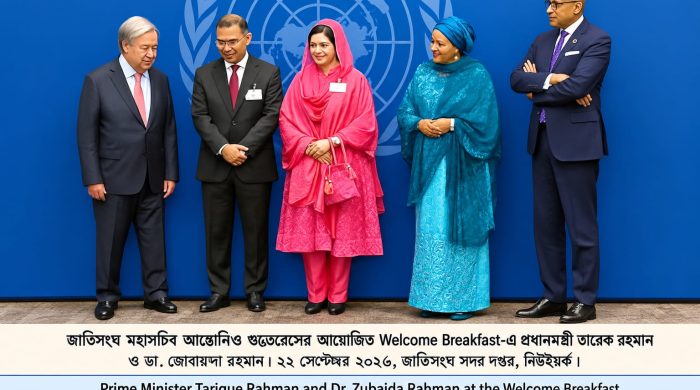
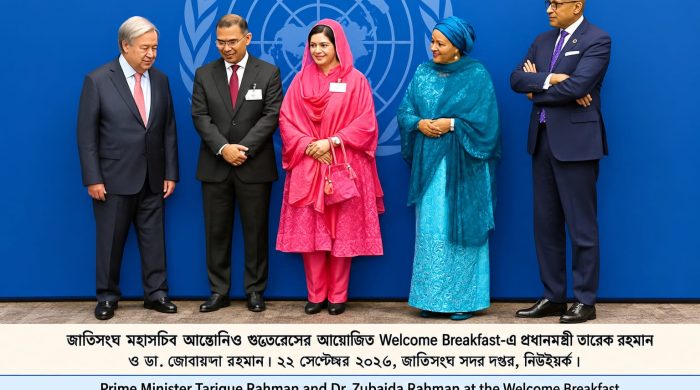
On 25 September 2026, Bangladesh and the United States signed a Memorandum of Understanding (MoU) in New York on Strategic Civil Nuclear Cooperation. Its main objectives are the peaceful use of nuclear energy, nuclear safety, security, safeguards, cooperation in science and technology, and strengthening the non-proliferation framework. It is not a direct agreement to purchase a nuclear power plant or reactor. Rather, it marks the beginning of Bangladesh’s nuclear cooperation with the United States.
2. Not a Counterpart to Bangladesh’s Nuclear Cooperation with Russia
The foundation of Bangladesh’s current nuclear programme is its long-term cooperation with Russia. The Framework Agreement of 2010 and the Inter-Governmental Agreement of 2011 paved the way for the construction of the Rooppur Nuclear Power Plant. Therefore, Russia remains Bangladesh’s principal technological partner in the Rooppur project.
However, the new agreement with the United States does not mean that Russia’s cooperation is coming to an end—the matter is not so. Rather, it adds a new international partner to Bangladesh’s nuclear cooperation.
3. Bangladesh’s Strategy
The importance of this cooperation for Bangladesh lies in several areas—
(1)- Acquisition of nuclear technology and knowledge;
(2)- Training of scientists and engineers;
(3)- Strengthening nuclear safety and security;
(4)- Building capacity regarding future advanced reactor/SMR technologies;
(5)- Reducing excessive dependence on a single foreign partner;
(6)- Expanding the range of technological and partnership options for future nuclear projects.
4. The US Strategy
Among the interests of the United States
are strengthening non-proliferation and nuclear security, as well as creating opportunities for future civil nuclear technology and commercial cooperation. US government policy also links civil nuclear cooperation with non-proliferation and the international market for the US nuclear industry.
5. Is Bangladesh Moving Towards a Neutral Nuclear Programme?
This is where the most important strategic aspect of the agreement lies.
Simply cooperating with both Russia and the United States does not mean that Bangladesh has adopted a “neutral nuclear energy policy.” However, the current step can be viewed as an important opportunity to move from dependence on a single partner towards diversified nuclear cooperation.
A possible balanced framework for Bangladesh’s nuclear programme could be—
(1) Russia — Rooppur and existing technological cooperation.
(2) United States — new technologies, research, safety and potential future cooperation.
(3) IAEA — proceeding while maintaining international safeguards and safety frameworks.
(4) Bangladesh — establishing its right to make final decisions in accordance with its national interests.
It may be recalled that
Bangladesh is already a party to the NPT and operates under IAEA safeguards and the Additional Protocol.
6. Balanced, Diversified Nuclear Strategic Autonomy
The new nuclear cooperation with the United States, therefore, is not an announcement of choosing an alternative to Russia; rather, it opens a new door for diversifying Bangladesh’s nuclear cooperation.
If Bangladesh adopts technologies and expertise from Russia, the United States and other international partners, while making decisions according to its national interests and technological requirements without becoming excessively dependent on any single power, it may gradually create an opportunity to develop a balanced, diversified and strategic-autonomy-based peaceful nuclear programme.
In essence: Russia at Rooppur, the United States in cooperation, the IAEA in safety—and Bangladesh in strategic decision-making.
[ Prof. M. A. Barnik is a professional defence analyst and international geopolitical observer ]

সম্পাদক আল মাহদী; উপদেষ্টা সম্পাদক আল ফাতাহ হাবিবুল্লাহ
ঠিকানা : সাংবাদিক ভবন, বাসা নং ২২১/২২২ রোড়ঃ ৩৫ ব্লকঃ ট সেকশন নং- ৬ রূপনগর মিরপুর ঢাকা-১২১৬।