মঙ্গলবার, ১৩ অক্টোবর ২০২৬, ০৮:৫৮ পূর্বাহ্ন



1. Introduction:
In the political history of Bangladesh, elections have always been a sensitive and controversial issue. Ensuring credible participation of the people is the responsibility of the state, and maintaining peace and order during elections is one of the government’s foremost duties. Yet, in the present reality, the interim government led by Dr. Muhammad Yunus is struggling even to handle minor mob incidents. Despite this, they dream of becoming the guardians of ballot boxes in the national election.
2. Where law and order stands in crisis:
(1). Recently, in different areas of Dhaka, law enforcement agencies have failed to control small rallies and demonstrations organized by students, youths, or working-class people.
(2). Even when a group of twenty to thirty people block a road or gather in front of a police station, the police and administration fail to play an effective role.
(3). This fragile state of law and order compels ordinary citizens to ask: if small crowds cannot be controlled, how will thousands of voters, candidates, agents, and supporters at polling centers be managed?
3. Election-time reality:
In national elections, tension always arises during the casting of votes and the announcement of results. Armed threats, factional clashes, the muscle power of influential politicians, and administrative weakness together create a complex situation. If an interim government loses control over small-scale daily mob incidents, then their failure win tackling election-time complexities is only natural.
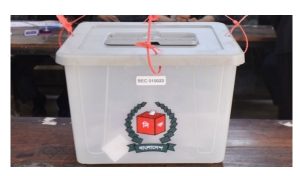
4. Who is responsible for guarding the ballot box:
The ballot box is not just a box; it symbolizes people’s trust, the future of the state, and the spirit of democracy.5
Security must be ensured: Without a strong security arrangement involving police, Ansar, BGB, and administrative officials, elections cannot be safe.
The trust of political parties must be earned: Not just declarations of neutrality on paper, but real actions and transparency must be demonstrated.
International oversight: Without monitoring from the global community, weak governments usually remain without credibility.
5. The questions of public opinion:
(1). If a government cannot stop a mob of ten to fifteen people within the country, can it ensure the safety of millions of voters?
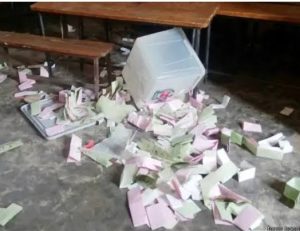
(2). If the government fails to guard the ballot boxes on election day, will people’s blood once again be shed?
(3). In such circumstances, will holding a national election mean the rebirth of democracy, or will it simply create a new farce?
6. The very capacity to hold elections is questioned:
Dr. Muhammad Yunus’s government now stands at a difficult crossroads. On one hand, it wants to establish itself as the “interim guardian,” while on the other, its shortcomings in the basic skills of state management expose its incapacity. In the eyes of the people, it has yet to prove that it is truly capable of being the guardian of the ballot box. Therefore, the question now arises—can Bangladesh witness a fair and credible national election under such weak governance, or will it once again fall into the deep abyss of political distrust and conflict?

সম্পাদক আল মাহদী; উপদেষ্টা সম্পাদক আল ফাতাহ হাবিবুল্লাহ
ঠিকানা : সাংবাদিক ভবন, বাসা নং ২২১/২২২ রোড়ঃ ৩৫ ব্লকঃ ট সেকশন নং- ৬ রূপনগর মিরপুর ঢাকা-১২১৬।