মঙ্গলবার, ১৩ অক্টোবর ২০২৬, ১২:২১ অপরাহ্ন


1. Breaking Religious Boundaries and Marking the Dawn of Political Progressiveness:
In Bangladesh’s politics, the question of religion, community, and identity has for decades drawn an invisible line of division. In the electoral field, within party structures, or in organizational ideology—positions were almost predetermined based on religious identity. In the midst of this entrenched reality, the nomination of Krishna Nandi as Jamaat-e-Islami’s candidate for Khulna–1 suddenly shook the prevailing equation.
The title, therefore, is not merely informational—it signals a political transformation, a new step toward progressive politics that rises above religious boundaries.
2. Krishna Nandi—A New Symbol of Politics Beyond the Borders of Identity:
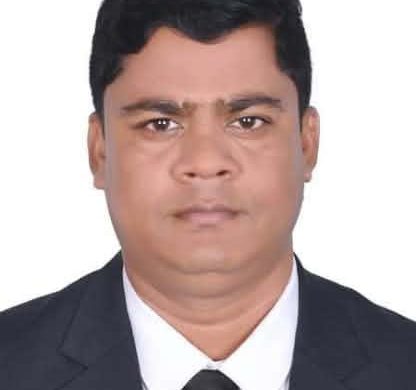
Emerging from Dumuria Upazila of Khulna district, Krishna Nandi has long been a businessman, social worker, and a prominent leader of the Hindu community. Another identity of his—President of the Hindu Committee of Jamaat-e-Islami in Dumuria Upazila.
This position already indicated his organizational engagement, his deep connection with local communities, and his representation of a new kind of political participation that transcends religious identity.
In December 2025, he was suddenly nominated by party decision for Khulna–1—a strategically important political constituency consisting of Dacope and Batiaghata.
3. The Islamic Political Significance of a Hindu Leader:
For a party built on Islamic political ideology to nominate a leader from a minority faith—this is not mere strategy; it is a multidimensional sign of internal transformation.
Three important messages emerge from this decision:
(1) A Claim to Progressiveness in Politics:
The party seeks to prove that politics can rise above religious boundaries.
(2) A Message of Trust Toward Minority Communities:
Not just courtesy toward Hindu voters, but an invitation to inclusive, participatory politics.
(3) An Attempt to Build Structural Diversity:
A break from the long-standing one-dimensional organizational structure.
This decision has placed the party in a new ideological discourse and created fresh national-level discussion.
4. The Aesthetic Character of Islamic Politics:
In Bangladesh, the political participation of minorities has long been confined to certain parties and a few constituencies. Parties of Islamic ideology generally did not step into those spaces.
The nomination of Krishna Nandi challenges that historical reality.
When the Hindu community campaigns directly for an Islamic political organization—this is not merely courage, but a political partnership built on mutual trust.
Affid this trend continues—
• Politics will no longer be divided by religion; rights and development will become the primary competition,
• Political representation for minority communities will expand,
• And the nation’s overall democracy will move toward a progressive framework.
5. Progressiveness in Religious Faith:
On a cold morning, Krishna Nandi walks along the earthen path by the riverbank of Batiaghata. Around him walk young activists, women, fishermen, farmers—Hindus and Muslims together.
He says to the villagers—
> “Religion does not carry me; I carry religion. But politics—this is for the people.
I want to represent people, not the religion of people.”
His words float in the air, and the village women respond—
“Religion may differ, but the soil is one.”
6. Evolution in Politics:
By nominating Krishna Nandi, Jamaat-e-Islami sends a clear message to national politics:
Not religion, but qualification, participation, and humanity—these may define the politics of the future.
The political progressiveness that can rise beyond religious boundaries—Krishna Nandi’s nomination may well be its point of origin.
In the history of Bangladesh’s political evolution, this is not a small decision—it is the opening of a new chapter full of possibilities.

সম্পাদক আল মাহদী; উপদেষ্টা সম্পাদক আল ফাতাহ হাবিবুল্লাহ
ঠিকানা : সাংবাদিক ভবন, বাসা নং ২২১/২২২ রোড়ঃ ৩৫ ব্লকঃ ট সেকশন নং- ৬ রূপনগর মিরপুর ঢাকা-১২১৬।