মঙ্গলবার, ১৩ অক্টোবর ২০২৬, ১২:১৬ অপরাহ্ন

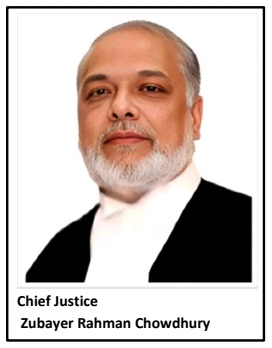

Chief Justice
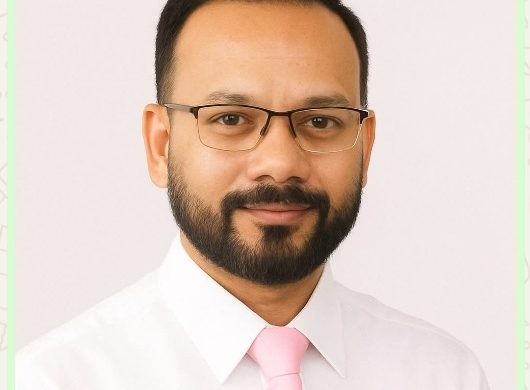
Zubayer Rahman Chowdhury
1. A Fellow Traveller of Memory :
Some people do not enter our lives as history; they enter as memory. Justice Zubayer Rahman Chowdhury is precisely such a person in my life—someone whom I did not witness becoming a judge on a particular day, but rather saw becoming a human being, slowly, silently, in the light of values.
As he prepares today to assume the office of the Chief Justice of the country, my eyes grow moist. These tears are of pride, gratitude, and remembrance—where two houses in Dhanmondi still stand in my memory as living history. I am M A Barnik, a Bengali researcher of the Language Movement. I am only five months older than him in age, yet in memory I feel like a much earlier fellow traveller in his journey.
2. Dhanmondi Road No. 6 : A Rented House, Yet a Palace of Values :
Their first residence was a rented house on Dhanmondi Road No. 6—a modest duplex by ordinary standards, yet illuminated from within by an extraordinary light.
I visited that house countless times. Each time I entered, it felt less like a structure of brick and cement and more like a sanctuary of ethics and moral discipline.
Justice Zubayer Rahman Chowdhury’s father, the renowned Justice Abdur Rahman Chowdhury, was a Language Movement activist and a man devoted to justice. He was regarded as the conscience of his generation. As a researcher of the Language Movement, my first acquaintance was with him. That acquaintance soon transcended formality and evolved into deep spiritual closeness.
When he spoke of the Language Movement, I saw fire in his eyes—but it was the fire of purity.
One day he said—
“The struggle to protect language is, in essence, a struggle to protect conscience.”
That single sentence still echoes in my ears.
3. Zubayer — A Silent Future Sitting at His Father’s Feet :
At Justice Abdur Rahman Chowdhury’s home, gatherings of learned and wise individuals were almost a daily occurrence. The discussions felt like assemblies of knowledge. In those gatherings, Zubayer Rahman Chowdhury would sit silently. At that time, he was neither a judge nor a lawyer—he was a student, a son.
I observed that he preferred listening over speaking.
He listened to moral reasoning in his father’s voice, to the responsibilities of the state, to the duty owed to humanity.
There is a proverb—
“A child who listens attentively to his father one day becomes worthy of listening to the people.”
I say with conviction—it was this habit of listening that brought him to his present position.
4. Dhanmondi 32 : A Confluence of Humanity :
Later, they moved to their own house at Dhanmondi 32. This house, too, is deeply etched in my memory.
Directly in front of it stood the residence of poet Begum Sufia Kamal.
This geographical closeness added a new dimension to our relationship.
Justice Zubayer Rahman Chowdhury and I—both of us gradually became recipients of Begum Sufia Kamal’s affection. She did not merely teach us poetry; she taught us how to remain human. One day, looking at Zubayer, she said—
“If you become a judge one day, remember—never be afraid to look people in the eye.”
Today, I feel the weight of those words profoundly.
The Restraint of a Judge Shaped by a Poet’s Affection
In the presence of Begum Sufia Kamal, both Zubayer Rahman Chowdhury and I learned to be gentle in conduct, yet never submissive.
There is a saying—
“One who learns humility before a poet does not bow before power.”
I have seen in his eyes that restraint, that silent firmness—qualities that remained intact through his barrister training in London, his practice at the High Court, and later on the judicial bench.
5. The Arbitration Room — A Laboratory of Justice :
Many arbitration sessions were held at Justice Abdur Rahman Chowdhury’s residence. I myself was present there on numerous occasions.
In that room, Zubayer Rahman Chowdhury did not merely sit beside his father—he observed how justice is born.
I witnessed the practice of listening to people before delivering judgment, maintaining balance in reasoning, and finally bowing one’s head before conscience.
These experiences made him a judge—not the oath, not promotions.
6. On the Seat of the Chief Justice — The Silent Boy of Time :
Zubayer Rahman Chowdhury, once the silent boy of our time, is today the Chief Justice of Bangladesh. Yet in my eyes, he remains that quiet boy—sitting in a room in Dhanmondi, learning how to be human.
There is a proverb—
“One who grows up with pure memories is capable of making pure decisions.”
I believe Justice Zubayer Rahman Chowdhury carries that legacy of purity.
Final Words,
History will record his judgments.
Newspapers will publish photographs of his oath-taking.
But I have written down something else—
how a human being became human.
This piece is written with my tears.
It is not a formal article—it is a chapter of my life.
Justice Zubayer Rahman Chowdhury and I, each within our own circles, continue to live as witnesses of time.

সম্পাদক আল মাহদী; উপদেষ্টা সম্পাদক আল ফাতাহ হাবিবুল্লাহ
ঠিকানা : সাংবাদিক ভবন, বাসা নং ২২১/২২২ রোড়ঃ ৩৫ ব্লকঃ ট সেকশন নং- ৬ রূপনগর মিরপুর ঢাকা-১২১৬।