মঙ্গলবার, ১৩ অক্টোবর ২০২৬, ০৭:৩৪ অপরাহ্ন


🔍 Introduction
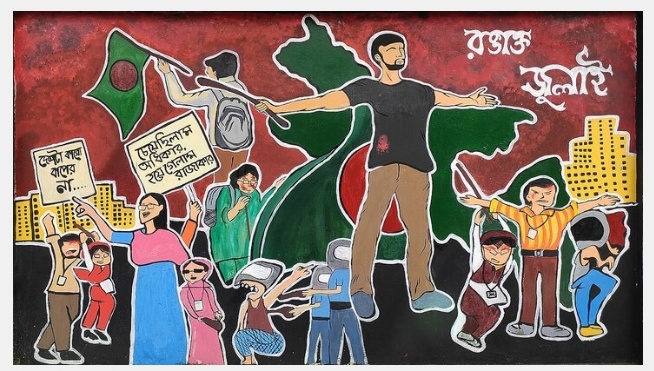
August 5, 2024, marked a historic turning point—the climactic moment of victory in the “July People’s Uprising” that reshaped Bangladesh’s recent political trajectory. As the nation observed the first anniversary in 2025, filled with remembrance and reverence, the physical absence of top leaders from the National Coordination Platform (NCP) in Dhaka—and their reported presence in Cox’s Bazar, along with former U.S. Ambassador Peter Haas—sparked renewed public suspicion.
—
🎥 Sequence of Events: What Happened on August 5?
On the morning of August 5, 2025, Dhaka saw the start of commemorations for “People’s Uprising Day” through political, civic, and citizen-led initiatives.
At the same time, former U.S. Ambassador Peter Haas was staying at the Royal Tulip Sea Pearl Hotel in Cox’s Bazar.
Sources indicated that 4–5 top NCP leaders were also present at the same location.
Media reports began circulating under the headline “Secret Meeting.”
In response, NCP’s Chief Coordinator Nasir Uddin Patwari made a public statement:
> “A few of us went to Cox’s Bazar earlier just for a trip. This is nothing but propaganda.”
—
📌 Analysis: A Casual Trip or Strategic Evasion?
1. Lack of Political Sensitivity
The absence of political leadership from Dhaka on such a critical anniversary sent a negative message to the public. People expected strong programs and courageous statements from NCP on this day. Instead, they were offered a justification of “casual travel.”
2. Suspicious Timing
The simultaneous presence of a high-profile diplomat like Peter Haas and NCP leaders at the same hotel, especially without prior public notice, makes it hard for the public to accept the “just a vacation” narrative.
3. Speculation About Secret Dialogue
The possible interaction between a “new” political force and a former U.S. diplomat—especially when the NCP claims to be a people’s movement rather than Western-backed—has raised eyebrows in opposition circles. Some interpret it as a form of betrayal.
4. Avoidance of Historical Responsibility
August 5 presented an opportunity to honor the martyrs, inspire the people, and reinforce NCP’s identity as an alternative leadership. By not fulfilling that role, NCP’s leadership may have lost public trust.
—
🔥 The Lesson of Politics: August 5 is Not Just a Date
The first anniversary of a revolution carries deep emotional and symbolic weight. If the leadership fails to show up, speak out, or participate in honoring the fallen—how can people accept them as legitimate representatives?
Politics is an invisible contract built on trust. When those who emerged from a popular uprising are absent on its most sacred day—questions will inevitably arise: Are they truly the voice of the people?
—
📢 Conclusion: Political Strategy or Political Misjudgment?
NCP had the opportunity to use this day to project unity, ideological clarity, and moral authority. Instead, it chose “sightseeing” over symbolism—delivering what many perceive as strategic silence on a day filled with potential.
The presence of a former U.S. envoy, combined with apparent indifference to a historic moment, casts doubt over NCP’s future standing as a trusted political alternative.
—
✅ Recommendations:
NCP must issue a clear and detailed explanation to ensure transparency regarding this incident.
The party should design strong public programs to demonstrate alignment with the people’s movement.
Moving forward, NCP must ensure presence and responsibility during all politically significant anniversaries.
—

সম্পাদক আল মাহদী; উপদেষ্টা সম্পাদক আল ফাতাহ হাবিবুল্লাহ
ঠিকানা : সাংবাদিক ভবন, বাসা নং ২২১/২২২ রোড়ঃ ৩৫ ব্লকঃ ট সেকশন নং- ৬ রূপনগর মিরপুর ঢাকা-১২১৬।