মঙ্গলবার, ১৩ অক্টোবর ২০২৬, ০৭:৩৯ পূর্বাহ্ন


1. Introduction:
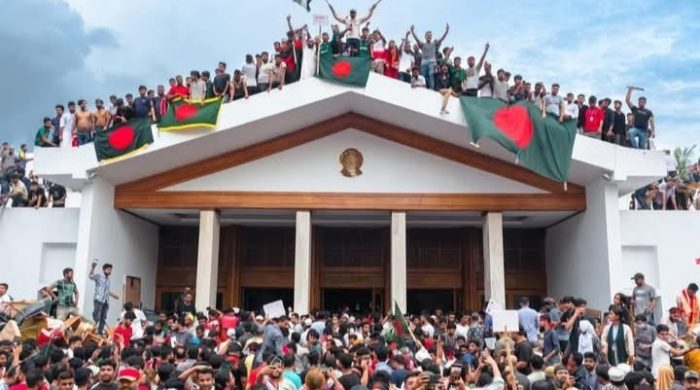
The July 2024 Mass Uprising was a milestone in the political history of Bangladesh. After years of repression, dynastic authoritarianism, and corruption, the people’s awakening was expressed through this uprising. However, the key condition for sustaining the victory of the movement is to ensure its constitutional foundation. If the July Charter does not receive constitutional recognition from the state, then the achievement of this revolution will become uncertain, and the future political process will be questioned.
2. Background: The July Charter, Interim Government, and the February Election:
Through the July Charter, the people accepted the legitimacy of the interim government.
As the head of the interim government, Dr. Muhammad Yunus took on the responsibility of political transformation.
The scheduled February election was to be the centerpiece of this process, but without constitutional recognition, this election will lose legitimacy.
If legitimacy is lost, not only the election but also the sacrifices of the martyrs and activists of the uprising will be questioned.
3. Political and Constitutional Challenges:
If the July Charter does not achieve constitutional foundation—
The legitimacy of the interim government will not stand.
The February election will be declared invalid.
The leaders of the uprising, members of the interim government, and activists may be charged with treason.
Bangladesh’s political position in the international arena will be weakened.
4. Reform vs. Revolution: The Necessary Path:
Bangladesh’s political crisis cannot be solved by reform alone.
Reform means retaining the old structure while making minor changes or polishing.
Revolution means breaking down the old structure and completely establishing a new one.
The central spirit of the July Uprising is revolution. Therefore, Dr. Yunus must bring about this revolution within the state structure. To realize the change envisioned by the people, there is no alternative but to hold a Constituent Assembly election, draft a new constitution, and organize national elections under that constitution.
—
5. The Responsibility and Decisions of Dr. Yunus’s Leadership
Dr. Muhammad Yunus has two open paths—
(1). To step aside from power, ensure constitutional recognition through the July Charter, and organize elections.
(2). To remain in power, become entangled in a crisis of legitimacy, and expose himself and his cabinet to the risk of treason charges.
History has proven that both personal security and political future are ensured only when advancing on the path of legitimacy. Therefore, this is not the question of any party (NCP or anyone else)—this is Dr. Yunus’s personal and moral responsibility.
6. Potential Impacts and Risk Analysis:
Positive impacts (if the July Charter is implemented):
A legitimate Constituent Assembly election.
Drafting of a new constitution and political stability.
Increase in public confidence and international recognition.
Negative risks (if constitutional foundation is not achieved):
The election will be declared invalid.
Dr. Yunus and his cabinet will face treason charges.
The sacrifices of the martyrs and activists will be wasted.
The political future of the country will become unstable and uncertain.
7. Conclusion
There is no obligation for elections to be held in February. After waiting for a long time without decisive change, Dr. Muhammad Yunus himself has become cornered. In the spirit of the mass uprising, his duty is to save himself and to save the nation. Therefore, his tasks are—
(1) Declaration of the July Charter.
(2) Constituent Assembly election.
(3). Drafting of a new constitution.
(4). Organizing national elections under the new constitution.
This is not a demand for reform, but for a complete revolution. If Dr. Yunus can accomplish this revolution, then he will not only be a leader but will be recognized in the history of Bangladesh as a revolutionary nation-builder.

সম্পাদক আল মাহদী; উপদেষ্টা সম্পাদক আল ফাতাহ হাবিবুল্লাহ
ঠিকানা : সাংবাদিক ভবন, বাসা নং ২২১/২২২ রোড়ঃ ৩৫ ব্লকঃ ট সেকশন নং- ৬ রূপনগর মিরপুর ঢাকা-১২১৬।