বুধবার, ২৫ নভেম্বর ২০২৬, ০৭:৪৭ অপরাহ্ন


1. Subject Matter of the Al Jazeera Documentary*
When religious beliefs become intertwined with political organisations, money, voting blocs, and state power, they can influence the course of international politics. Al Jazeera’s documentary, “Greater Israel: How Christian Zionism Became Policy,” explores an important dimension of this reality through the concept of “Greater Israel.”
Released on 12 November 2026 and directed by Awad Juma, the documentary investigates how a biblical religious concept has evolved into a force capable of influencing the political and diplomatic policies of the United States.
*2. Historical Roots of the Religious Concept*
The historical foundation of the Greater Israel concept stems from a particular interpretation of the biblical Promised Land, extending “from the Nile River to the Euphrates.” Christian Zionist thinkers have been promoting this concept for generations.
In 1891, evangelist William Eugene Blackstone submitted a petition to U.S. President Benjamin Harrison, calling for the restoration of Palestine to the Jewish people. This event represents an important early example of the political activism of the Christian Zionist movement in the United States.
*3. John Hagee and Political Organisation*
The documentary places particular emphasis on the statements of Texas-based pastor John Hagee. He has described vast territories, including Egypt, Lebanon, Syria, Jordan, Kuwait, and parts of Saudi Arabia, as lands divinely granted to Israel.
Hagee is the founder of Christians United for Israel (CUFI). The organisation claims to have more than 10 million members. According to OpenSecrets, the CUFI Action Fund spent $679,410 on federal lobbying in 2025.
In other words, when religious advocacy becomes connected with organised voting blocs and financial power, it can also exert influence over political decision-making.
*4. Religious Influence on U.S. Diplomacy*
The documentary highlights a statement made by U.S. Ambassador Mike Huckabee during an interview with Tucker Carlson in February 2026. When asked whether Israel had the right to take all the land described in the Bible, he responded that it would be fine if Israel took all of it.
This statement raises new questions about the relationship between religious territorial concepts and the diplomatic positions of the United States.
However, U.S. policy towards Israel is not driven solely by religious beliefs; it is also shaped by security concerns, military cooperation, and geopolitical interests.
*5. Syria and Lebanon: Territorial Realities*
The documentary links Israel’s military activities in Syria and Lebanon to the broader debate over territorial ambitions.
It refers to Israel’s expansion of control over approximately 400 square kilometres beyond the Golan Heights following the fall of the Assad government in Syria. Similarly, it highlights the destruction of numerous villages and the displacement of thousands of people during Israeli military operations in southern Lebanon.
Israel justifies these actions on the grounds of border security and threats posed by Hezbollah. Critics, however, fear that security arguments may be used to establish long-term territorial control.
*6. Changing American Public Opinion*
According to the April 2026 survey by the Pew Research Center cited in the documentary, 60 per cent of Americans hold an unfavourable view of Israel. The proportion of Americans expressing a “very unfavourable” opinion of Israel increased from 10 per cent in 2022 to 28 per cent in 2026.
Meanwhile, a December 2025 survey by the IMEU Policy Project and YouGov found that 51 per cent of Republicans under the age of 45 would be inclined to support a presidential candidate who favours reducing arms supplies to Israel.
These findings suggest that despite the continuing influence of established political institutions, dissatisfaction with U.S. policy towards Israel is growing among a section of the American public.
*7. Religion, Power and Geopolitics*
The central message of Al Jazeera’s documentary is that when religious beliefs evolve into organised political forces, they can influence state policies as well.
The Greater Israel debate, therefore, is not merely a matter of religious belief; it is closely connected with domestic American politics, Israel’s territorial ambitions, Middle Eastern security, and the international balance of power.
Nevertheless, religious ideology, political statements, and military operations must be analysed separately rather than treated as parts of a single, inseparable phenomenon.
In my assessment, understanding the future crises of the Middle East requires more than an analysis of military power and geopolitical interests. The political use of religious ideology and its influence on international policymaking must also be examined closely. For when religion becomes a claim to territory, and that claim becomes intertwined with state power, its consequences extend beyond regional boundaries and can influence global politics.
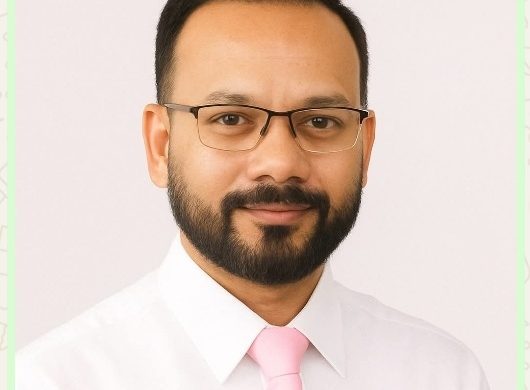
[The author, Professor M. A. Barnik, is a distinguished defence analyst and a keen observer of international geopolitical strategies.]
—

সম্পাদক আল মাহদী; উপদেষ্টা সম্পাদক আল ফাতাহ হাবিবুল্লাহ
ঠিকানা : সাংবাদিক ভবন, বাসা নং ২২১/২২২ রোড়ঃ ৩৫ ব্লকঃ ট সেকশন নং- ৬ রূপনগর মিরপুর ঢাকা-১২১৬।