রবিবার, ৩০ অগাস্ট ২০২৬, ০১:৩৫ অপরাহ্ন

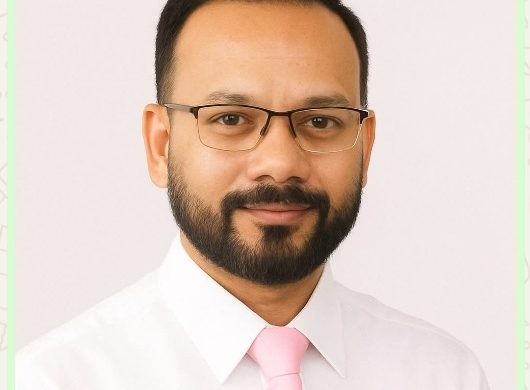

1. Background* : Immediately after Mr. Humayun Kabir joined as the State Minister for Foreign Affairs, a new strategic turn has become visible in Bangladesh’s foreign and security policy. Even while Foreign Minister Khalilur Rahman and State Minister Shama Obaid remained in their respective positions, Mr. Humayun Kabir began to make his presence felt with surprises. He is now in Saudi Arabia with another such strategic surprise. Discussions over Bangladesh’s possible accession to the Makkah Joint Defence Pact, initiated by Saudi Arabia, Türkiye and Pakistan, are not merely about joining a military agreement; they also open up the possibility of creating an alternative strategic space outside South Asia’s conventional India-centric security architecture. Mr. Humayun Kabir is poised to be the architect of this initiative.
Bangladesh has not yet taken a final decision to join the pact. However, State Minister for Foreign Affairs Humayun Kabir has stated that if such a security framework is consistent with Bangladesh’s national interests, participation in it is being viewed positively. Meanwhile, India’s Ministry of External Affairs spokesperson Randhir Jaiswal has made it clear that New Delhi is closely monitoring developments that have implications for its national security.
*2. The New Strategic Reality :*
Since 1971, Bangladesh has for a long time pursued a foreign policy in which it has maintained balanced relations with India, China, the United States, Japan, the Middle East and other powers, without being confined to the sphere of influence of any single power. But amid changing global and regional realities, Dhaka now seeks to make that balance more multidimensional.
The combination of Saudi Arabia, Türkiye and Pakistan within the Makkah Defence Pact has itself created a new security equation. If Bangladesh joins this framework, it would acquire a new dimension by potentially extending the framework into the eastern part of South Asia.
This is where the potential beginning of the end of the India-centric security architecture lies.
*3. Bangladesh Beyond India’s Singular Strategic Influence* :
If Bangladesh becomes part of this defence framework, Dhaka’s security relations will no longer remain confined to an India-centric geopolitical reality. Türkiye’s defence technology, Pakistan’s military capabilities, and Saudi Arabia’s economic and strategic strength could create new areas of partnership for Bangladesh.
This does not mean that Bangladesh is entering an anti-India military alliance—such a simplistic equation would be misleading. Rather, it means that Bangladesh is seeking to develop multiple strategic options for its national security.
This shift is important for India because the presence of new states and new defence actors in Bangladesh’s security equation will naturally compel India to reassess the scope of its traditional influence.
*4. Strategic Expansion from the Bay of Bengal toward the Wider Muslim World* :
Bangladesh’s geographical position makes this shift even more significant. If Bangladesh, located at the northern end of the Bay of Bengal, becomes connected to emerging defence networks in West Asia and South Asia, a Gulf–South Asia–Bay of Bengal strategic linkage could potentially emerge within the security equation.
This remains a possibility; it is not yet an actual military arrangement. However, if defence technology, training, military cooperation and maritime security cooperation expand in the future, new calculations will have to be incorporated into India’s eastern security planning.
*5. The Real Test of the ‘Bangladesh First’ Policy* :
In this situation, the most important question before Bangladesh is—can the country develop diversified strategic partnerships while placing its own national interests at the forefront?
*6. Joining the Makkah Pact* : For Bangladesh, this could create new strategic opportunities, but it also raises the question of military obligations. Given the pact’s concept of collective defence, it is critically important for Bangladesh to determine what responsibilities would arise for other member states if any one member state were attacked.
Therefore, the decision must be made not merely by considering the Indian reaction, but by taking into account Bangladesh’s own national security, economy, diplomatic independence and long-term interests.
*7. What Is the Message for India?*
It would be wrong to interpret Bangladesh’s possible move as a direct declaration of hostility toward India. But it carries an important strategic message for New Delhi—Bangladesh’s foreign policy will no longer remain confined within the security perspective of any single regional power.
The new reality for India is that Bangladesh may seek to expand the scope of its strategic partnerships to West Asia, Türkiye and Pakistan. Indian strategic analysis is also viewing this shift as a new challenge within the eastern security space.
*8. Expectations for an Independent Military Security Framework*
If Bangladesh joins the Makkah Defence Pact, its significance will not be limited to acquiring membership in a new military alliance. It could become a visible step toward strategic diversification in Bangladesh’s foreign and security policy.
And that is precisely why the issue is so important to India. Because it could create a new equation in South Asia’s security architecture—one in which India is no longer the sole central security actor; rather, Bangladesh would develop strategic relationships with multiple powers based on its own national interests.
Therefore, Bangladesh’s possible accession to the Makkah Defence Pact cannot be understood merely as a military decision; doing so would overlook its true strategic significance. It could mark the beginning of a new chapter in Bangladesh’s foreign policy—where, instead of an “India-centric security architecture”, Bangladesh moves toward a multidimensional, balanced and more independent security framework centred on its own national interests.
*[ Professor M. A. Barnik : Renowned Military and Security Analyst and Observer of Strategic International Geopolitics ]*

সম্পাদক আল মাহদী; উপদেষ্টা সম্পাদক আল ফাতাহ হাবিবুল্লাহ
ঠিকানা : সাংবাদিক ভবন, বাসা নং ২২১/২২২ রোড়ঃ ৩৫ ব্লকঃ ট সেকশন নং- ৬ রূপনগর মিরপুর ঢাকা-১২১৬।