মঙ্গলবার, ১৩ অক্টোবর ২০২৬, ০৫:৫৫ পূর্বাহ্ন


—Professor M. A. Barnik*
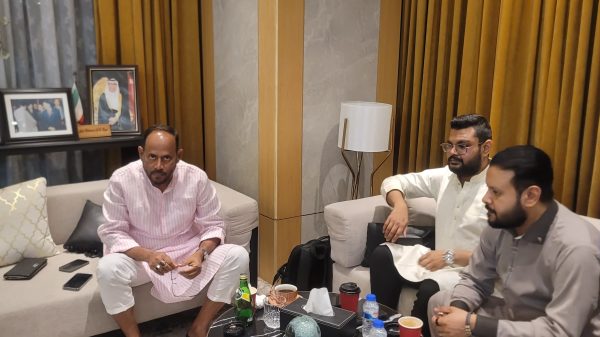
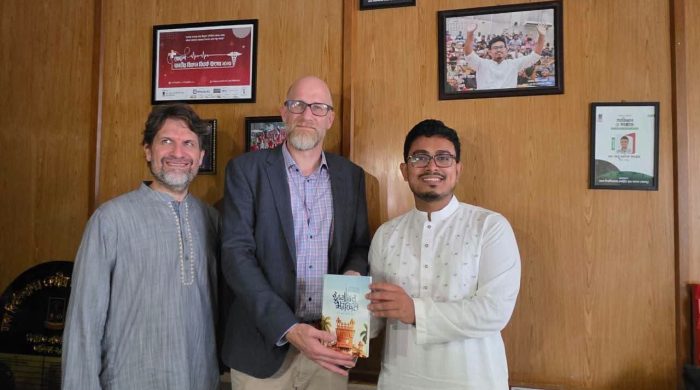
The recent meeting between DUCSU Vice President Sadik Kayem and a delegation from the U.S. Embassy in Dhaka can be viewed as a positive and significant development in the context of Bangladesh’s academic environment and international relations. The meeting, held at the DUCSU building on August 23, 2026, was attended by James A. Stewart, Political Officer at the U.S. Embassy, and Scott Hartmann, Public Diplomacy Officer. The discussion primarily focused on education, skills development, and expanding international opportunities for students of the University of Dhaka.
Communication Focused on Students and the Future Generation
The most positive aspect of the meeting was that students and their future remained at the center of the discussion. The issues raised included expanding opportunities for Bangladeshi students to pursue higher education at U.S. universities, scholarships and financial assistance, academic exchanges, research and fellowships, and greater participation of students at the international level.
Viewing this merely as a diplomatic courtesy meeting would obscure much of its real significance. Direct engagement between the younger generation of one country and diplomatic and educational institutions of another can, in the long term, create bridges for knowledge, skills, research, and human-resource development.
A New Dimension to DUCSU’s International Profile
The Dhaka University Central Students’ Union—DUCSU—is one of Bangladesh’s most historically significant institutional platforms representing students. Direct engagement between DUCSU and foreign diplomats therefore carries an indication of the growing international relevance of an institution representing the student community.
In particular, when the DUCSU Vice President highlighted the need for workshops, seminars, and counseling on scholarships, preparation for higher education abroad, English-language proficiency, research, and academic writing, it became evident that the discussion created an opportunity to move toward practical and student-centered initiatives.
An Effective Example of “Public Diplomacy”
Modern diplomacy is no longer confined to government-to-government relations. Engagement with universities, research institutions, students, young leaders, and civil society has also become an important component of international relations. In that sense, the meeting between the DUCSU Vice President and U.S. diplomats may be regarded as a positive example of people-to-people diplomacy.
On the same day, a six-member delegation from the U.S. Embassy also met with the Vice Chancellor of the University of Dhaka. Discussions included programs marking U.S. Constitution Day, seminars and public lectures involving American experts, joint research on constitutional law, and the possibility of dual-degree programs with U.S. universities.
Thus, the meeting with the DUCSU Vice President may also be viewed as part of a broader framework of academic engagement between the University of Dhaka and the United States.
Significance of the Visit to the July Museum
Following the meeting, the U.S. delegation also visited the July Museum located in the DUCSU building. When the electricity went out during the visit, they toured the museum using the light from their mobile phones.
Rather than viewing this merely as a temporary incident, it can be considered from a broader perspective. The visit provided foreign diplomats with an opportunity to gain a direct understanding of Bangladesh’s recent student-public movement, its socio-political impact, and the role played by the younger generation. At the same time, it offered an opportunity to present the experiences and aspirations of Bangladesh’s new generation to an international audience.
Potential Benefits
If this form of engagement continues on a sustainedএ basis, several tangible benefits may emerge.
First, opportunities for higher education and scholarships in the United States may increase for talented Bangladeshi students.
Second, research and academic partnerships between the University of Dhaka and American universities may become stronger.
Third, new avenues may open for students in research, fellowships, exchange programs, and professional skills development.
Fourth, young Bangladeshi leaders may gain greater opportunities to present their perspectives and experiences on international platforms.
Fifth, mutual understanding and trust between the peoples of Bangladesh and the United States may be further strengthened.
An Important Message
Perhaps the most important positive message from this meeting lies here: international partners are showing growing interest in the future of Bangladesh’s young generation. However, rather than viewing this interest through the narrow lens of political interpretation, the most productive approach would be to utilize it as an opportunity for education, research, skills development, innovation, and human-resource advancement.
At the same time, DUCSU should ensure that its international engagement is not confined to any particular political or geopolitical interest. Instead, it should remain focused on students’ rights, intellectual development, research, international exposure, and career advancement.
Conclusion
The meeting between DUCSU Vice President Sadik Kayem and U.S. diplomats can therefore be viewed as a promising beginning of a new form of engagement between Bangladesh’s student community and the international academic arena. The key issues discussed—education, scholarships, research, academic exchanges, and skills development—are directly connected to the future of the younger generation.
If this engagement can rise above political and diplomatic considerations and evolve into a long-term partnership in knowledge, research, and human-resource development, its benefits could extend far beyond the University of Dhaka and reach the young generation of Bangladesh as a whole.
Therefore, it would be more appropriate to view this meeting not merely as a “meeting between the DUCSU Vice President and U.S. diplomats,” but as a promising connection between Bangladeshi youth and the knowledge and educational system of one of the world’s most influential countries.

সম্পাদক আল মাহদী; উপদেষ্টা সম্পাদক আল ফাতাহ হাবিবুল্লাহ
ঠিকানা : সাংবাদিক ভবন, বাসা নং ২২১/২২২ রোড়ঃ ৩৫ ব্লকঃ ট সেকশন নং- ৬ রূপনগর মিরপুর ঢাকা-১২১৬।