বুধবার, ০৭ অক্টোবর ২০২৬, ০৪:০০ পূর্বাহ্ন



1. Introduction
The Bay of Bengal Conversation (BoBC) is essentially an international strategic dialogue platform organised in Dhaka by the Centre for Governance Studies (CGS). The fifth edition in 2026 was held from 3–5 October 2026 at the Pan Pacific Sonargaon Hotel in Dhaka. Its central theme was—“Fragments • Frontiers • Futures: Navigating Power, Technology and Trust in a World Rewritten”.
The question is—what are the tangible benefits for Bangladesh from such an international conference?
The answer is not limited to any agreement, investment or immediate economic gain. Bangladesh’s greatest achievement is the opportunity to establish itself as a visible centre for discussions on the Bay of Bengal and the broader Indo-Pacific geopolitics.
—
2. The First Benefit for Bangladesh—Enhanced Strategic Visibility
According to the organisers and media reports, the 2026 dialogue brought together participants from more than 100 countries, nearly 200 speakers and more than 300 delegates. The participants included former heads of state, ministers, diplomats, policymakers, researchers, business leaders, technologists and representatives of civil society.
In other words, Bangladesh was not merely an audience to the discussions; Bangladesh itself was the host country of this international dialogue.
In diplomatic terms, this represents an important soft-power gain.
—
3. The Second Benefit—Presenting the Bay of Bengal as a Strategic Asset for Bangladesh
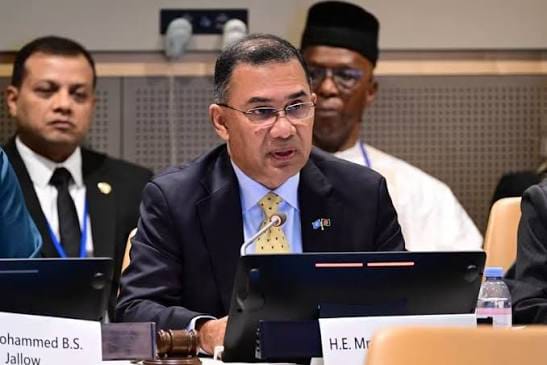
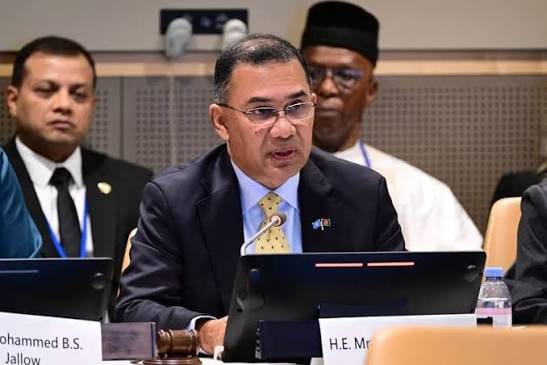
In his inaugural address, the Prime Minister called for transforming the Bay of Bengal into a “shared prosperity” region. He highlighted the potential to connect Bangladesh’s geographical position, ports, maritime routes and coastal economy with international trade, shipping, fisheries, tourism, energy and regional supply chains.
This represents an important strategic message for Bangladesh:
«The Bay of Bengal is not merely the sea lying before Bangladesh; it is an important asset for Bangladesh’s economic and geopolitical future.»
—
4. The Third Benefit—Generating International Interest in Ports and the Maritime Economy
There is an opportunity to connect Bangladesh’s Chattogram and other seaports, its coastal economy and its position in the Bay of Bengal with regional connectivity.
The dialogue placed emphasis on trade, connectivity and strategic growth, as well as maritime affairs. As a result, it has created a diplomatic platform for Bangladesh to expand opportunities for international partnerships in the future in areas such as—
Port development,
Shipping and logistics,
Regional supply chains,
Blue economy,
Fisheries,
Maritime tourism,
Energy transportation
and other related sectors.
However, one important point must be kept in mind—discussion at a dialogue and securing actual investment or projects are not the same thing. To achieve tangible economic benefits, effective follow-up diplomacy will be necessary at the subsequent stage.
—
5. The Fourth Benefit—An Opportunity to Demonstrate Bangladesh’s “Balanced Diplomacy”
The current world order is becoming increasingly competitive—the United States, China, India, Russia, Japan, European powers and other regional powers each have their own interests.
In this context, an important strategy for Bangladesh is to maintain multidimensional relationships without becoming completely confined to the sphere of any single power.
By bringing political leaders, diplomats, business leaders and experts from different regions together on a platform such as BoBC, Bangladesh gains an opportunity to demonstrate this multi-vector diplomacy.
The Prime Minister also stated in his address that Bangladesh seeks to work positively with regional and global partners while safeguarding its national interests and sovereignty.
—
6. The Fifth Benefit—Giving Bangladesh Its Own Voice in the Indo-Pacific Debate
One of the five major pillars of BoBC 2026 was “Power in Transition”, where geopolitics, security and strategic competition were discussed. Other pillars included AI and cyber technology, trade and connectivity, climate and human security, and democracy and governance.
In other words, Bangladesh has created, on its own soil, a platform where the Bay of Bengal is being discussed as part of the broader Indo-Pacific.
This is important because Bangladesh is situated at a strategically important crossroads between the Indian Ocean and Southeast Asia.
—
7. The Sixth Benefit—Economic and Investment Opportunities
The Prime Minister highlighted the goal of developing Bangladesh as a manufacturing and investment hub and spoke of expanding partnerships in trade, energy, education, technology, climate and maritime affairs.
This has created an opportunity to present to international businesses and investors the combined potential of Bangladesh—
Market + workforce + geographical location + ports + regional connectivity
However, it should once again be emphasised that this is a potential benefit, not investment already secured. To translate the success of BoBC into tangible economic outcomes, sustained engagement with investors and project-based follow-up will be necessary after the conference.
—
8. The Seventh Benefit—New Connections in Technology and AI
A full-fledged pillar of the 2026 dialogue was “The Technology Frontier: AI, Cyber Space and Information Power”.
This carries considerable significance for Bangladesh.
Because the economy of the future will not depend solely on garments or conventional industries. AI, cybersecurity, the digital economy, data governance and emerging technologies are becoming new areas of economic competitiveness for Bangladesh.
Such international dialogues provide Bangladesh’s policymakers, technologists, entrepreneurs and young leaders with opportunities to connect with international knowledge networks and partners.
—
9. The Eighth Benefit—Highlighting Bangladesh’s Position in Climate Diplomacy
Bangladesh is one of the world’s most climate-vulnerable countries. One of the full-fledged pillars of BoBC was “Climate, Resilience & Human Security”.
As a result, Bangladesh can present its practical experience regarding—
Coastal vulnerability, climate change, sea-level rise, disaster management and climate resilience
at the international level.
This may become a diplomatic asset in the future in areas such as climate finance, technology transfer and adaptation cooperation.
—
10. The Ninth Benefit—International Connections for the Younger Generation
A Young Leaders Forum was included in BoBC 2026.
This creates opportunities for young Bangladeshi researchers, entrepreneurs, policy thinkers and professionals to enter international networks.
In the long term, this could become a human-capital and knowledge-diplomacy benefit for Bangladesh.
—
11. However, the Most Important Question—What Immediate Benefits Have Been Achieved?
A realistic approach is necessary here.
According to the information currently available, there is no indication that BoBC 2026 resulted in any major intergovernmental agreement, specific foreign investment, new port project or specific financial assistance for Bangladesh.
Therefore, rather than directly characterising the conference as an “economic achievement”, it is more reasonable to view it as a “strategic and diplomatic investment”.
Its outcomes will have to be measured over the coming months and years through indicators such as—
How many new investments have arrived?
How many maritime projects have been undertaken?
How many technology partnerships have been established?
How many trade initiatives have been implemented?
How much has Bangladesh’s influence increased within international policy networks?
These indicators will provide the basis for assessment.
—
12. The Key Lesson for Bangladesh
The most important lesson for Bangladesh from the Bay of Bengal Conversation 2026 could be—
«To use the Bay of Bengal not merely as a geographical boundary, but as a strategic platform for the economy, trade, security, technology and diplomacy.»
If Bangladesh can connect platforms such as BoBC with regular and effective follow-up diplomacy, they can become a means of enhancing Bangladesh’s soft power, economic diplomacy and strategic autonomy in the future.
—
13. Conclusion
Overall, it can be said that the strategic gains for Bangladesh from the Bay of Bengal Conversation 2026 are more visible than its immediate financial gains.
The major potential achievements for Bangladesh include—
1. Increased visibility of Dhaka as a centre of international strategic dialogue;
2. Highlighting the importance of the Bay of Bengal at the international level;
3. Opportunities for new partnerships in the maritime economy and regional connectivity;
4. An opportunity to articulate Bangladesh’s own position in Indo-Pacific geopolitics;
5. A new diplomatic platform for attracting trade and investment;
6. International engagement in AI, cybersecurity and emerging technologies;
7. Presenting Bangladesh’s practical experience in climate and human security;
8. Expanding international networks for young leadership and knowledge-based cooperation.
However, these should not yet be regarded as fully realised achievements; rather, they are opportunities and strategic possibilities for achieving such gains. The actual success will depend on how effectively Bangladesh can transform the international connections generated through this dialogue into concrete outcomes in policy, investment, trade, technology, maritime cooperation and practical projects.
Therefore, the true value of the Bay of Bengal Conversation does not lie merely in the holding of the conference; rather, it lies in how effectively the discussions generated by the conference can be transformed into tangible diplomatic and economic outcomes in the national interest of Bangladesh.
*[ Professor M. A. Barnik is a high-level defence analyst and a keen observer of international geopolitical developments ]*

সম্পাদক আল মাহদী; উপদেষ্টা সম্পাদক আল ফাতাহ হাবিবুল্লাহ
ঠিকানা : সাংবাদিক ভবন, বাসা নং ২২১/২২২ রোড়ঃ ৩৫ ব্লকঃ ট সেকশন নং- ৬ রূপনগর মিরপুর ঢাকা-১২১৬।