মঙ্গলবার, ১৩ অক্টোবর ২০২৬, ০৭:১৪ পূর্বাহ্ন


A national parliament is not an ordinary meeting chamber. It is the platform of a nation’s conscience, the symbol of its aspirations, and the sacred arena of democracy. Just as every word spoken within its walls finds a place in the pages of history, so too do the conduct, demeanor, and attire of those who occupy its seats convey powerful messages to the people. Members of Parliament are not merely individuals; they are living symbols of the State itself. Consequently, their attire transcends personal preference and becomes an integral part of national dignity.
Across the world, various forms of regulations govern the attire of parliamentarians. In some countries, there are Written Dress Codes; in others, Unwritten Conventions. Some enforce Strict Dress Regulations, while others follow Flexible Dress Standards. Yet there is a universal consensus: Dignified and Professional Attire is essential for preserving the prestige of Parliament.
Although the Parliament of the United Kingdom does not maintain a Formal Dress Code, members are expected to appear in Business-like and Professional Attire. Canada and Australia follow similar Professional Dress Standards. In Kenya, Formal Parliamentary Attire, including coats, ties, and other prescribed forms of dress, is mandatory. Namibia has gone even further by establishing Codified Dress Regulations that specify acceptable forms of attire. Mature democracies have thus recognized that dress is not a trivial matter; it is an important element in safeguarding the dignity of Parliament.
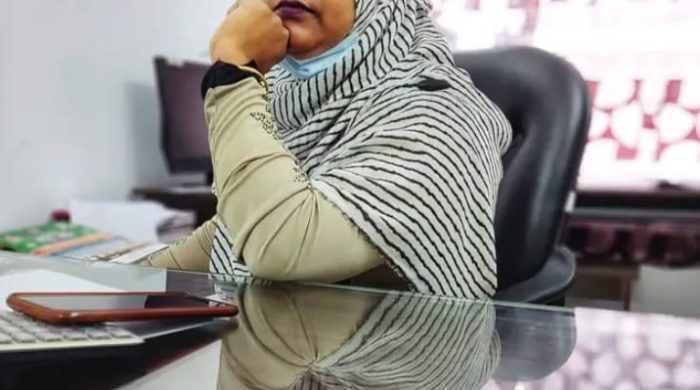
At present, Bangladesh’s National Parliament lacks a clear and comprehensive Parliamentary Dress Code. As a result, there are occasions when a female member delivers a speech in attire that sparks widespread criticism across social media and public discourse. On the other hand, there have also been instances where a member appears with her face covered to such an extent that the Identity and Facial Expression of an elected representative remain largely invisible to the public.
Similarly, some male members have attended parliamentary sessions wearing jerseys, T-shirts, or other forms of Casual Wear, giving rise to public debate and criticism. If Parliament is the face of the State, can attire designed for sports fields or leisure activities truly be appropriate for such a solemn institution?
To answer this question, we must consider our religious, cultural, and national values collectively.
Just as the Constitution of Bangladesh guarantees religious freedom, it also acknowledges the religious and cultural sentiments of the overwhelming majority of its citizens. In Islamic thought, Modesty is a fundamental value. In discussing Verse 31 of Surah An-Nur, many Islamic scholars have explained that a woman’s attire should be such that it does not unnecessarily display physical beauty. At the same time, numerous jurists and Qur’anic commentators have referred to “Zuhara”—namely the face, the wrists, and the ankles—as areas traditionally discussed in relation to modest dress, while emphasizing the covering of the rest of the body. Although different interpretations exist throughout the Muslim world, a balanced approach may be adopted in a state institution such as Parliament—one that gives equal importance to Modesty, Identity Visibility, and Effective Communication.
Clothing is, in essence, a language. It speaks without words. A disciplined appearance speaks of responsibility; a modest appearance speaks of character; and a dignified appearance reflects respect for the State.
For this reason, a balanced Parliamentary Dress Code should be considered for the National Parliament of Bangladesh.
Proposed Dress Code
For Female Members
1. Sarees, salwar-kameez, long coats, abayas, or other forms of Modest National or Cultural Attire that are compatible with the cultural and religious values of Bangladesh.
2. Clothing should be Non-Revealing and should not inappropriately accentuate the body’s shape.
3. Full freedom should be guaranteed for the wearing of the Hijab.
4. For the purposes of Accountability and effective communication during parliamentary proceedings, maintaining visible facial identification may be encouraged.
5. Provocative or Transparent Attire, including excessively tight or revealing clothing, should be avoided.
For Male Members
1. Suits, coat-and-tie combinations, national dress, panjabi-pajama, sherwani, or other forms of Formal or National Attire that reflect dignity and professionalism.
2. Sportswear and Casual Wear, including jerseys, T-shirts, shorts, and tracksuits, may be prohibited within parliamentary sessions.
3. Clothing should not display Political Slogans, campaign messages, or Commercial Advertising.

সম্পাদক আল মাহদী; উপদেষ্টা সম্পাদক আল ফাতাহ হাবিবুল্লাহ
ঠিকানা : সাংবাদিক ভবন, বাসা নং ২২১/২২২ রোড়ঃ ৩৫ ব্লকঃ ট সেকশন নং- ৬ রূপনগর মিরপুর ঢাকা-১২১৬।