মঙ্গলবার, ১৩ অক্টোবর ২০২৬, ০৮:৪০ পূর্বাহ্ন

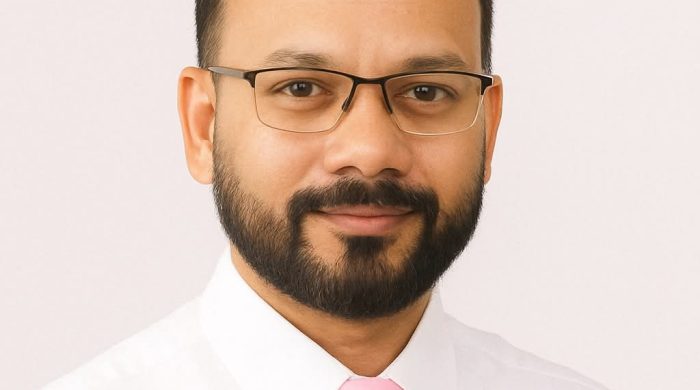

The centuries-old walls of Oxford have witnessed countless chapters of history. When the future of post-revolution Bangladesh is discussed in this distinguished setting—enriched by the footsteps of world leaders, political thinkers, Nobel laureates, and social reformers—it becomes more than an academic event; it transforms into an opportunity to present a nation’s potential, challenges, and aspirations on a global stage.
Representing Bangladesh’s young leadership in that discussion were student leaders Abu Sadiq Kayem and Hasnat Abdullah. Their presence was significant not merely as individuals, but as symbols of the aspirations and struggles of an entire generation.
As discussions unfolded in Oxford’s halls on Bangladesh’s recent political transformation, mass movements, and prospects for state reconstruction, students and researchers from around the world sought answers to an important question—how does a nation rebuild itself after a movement or revolution?
It is in the search for that answer that the significance of the participation of Sadiq Kayem and Hasnat Abdullah becomes evident.
History’s great transformations are not recorded solely in books; they are also preserved in the experiences of those who witness them, lead them, and take part in them. Their contributions at Oxford therefore carried special importance as firsthand accounts of Bangladesh’s contemporary realities.
Yet it would be a mistake to confine this significance to the realm of personal achievement.
The true importance lies in amplifying the voices of Bangladesh’s youth within one of the world’s most prestigious intellectual forums. For decades, Bangladesh has often been discussed in the context of development, poverty, or natural disasters. Today, however, it has emerged as a focal point of international interest for its political awareness, civic engagement, and youthful leadership.
The Oxford discussion resembled a scene from a novel. On one side stood the passion of revolution; on the other, the harsh realities of nation-building. There were dreams, but there were also words of caution.
As one senior professor remarked, “A nation that learns to listen to its youth is a nation that advances toward the future.”
For Bangladesh, this observation is deeply significant. The true success of any movement depends on how accountable, just, and inclusive the system established in its aftermath can become.
The presence of Sadiq Kayem and Hasnat Abdullah therefore conveys an important lesson: while it is vital for the voices of young people to reach international platforms, it is equally important to establish democratic values, tolerance, and responsible leadership within the country itself.
To make the most of the opportunities before Bangladesh today, several priorities deserve special attention—
• Building institutions rather than relying on personality-centered politics.
• Ensuring freedom of expression and the rule of law.
• Expanding long-term investment in education, research, and technology.
• Taking effective measures against corruption and inequality.
• Fostering a culture of unity in pursuit of national interests despite political differences.
At the conclusion of the discussion in Oxford’s historic setting, the applause faded, but the questions remained. What kind of future Bangladesh will have is not a question that any foreign university can answer; that answer must be written by the people of Bangladesh themselves.
Nevertheless, the participation of Sadiq Kayem and Hasnat Abdullah in the Oxford discussion made one thing clear—Bangladesh’s young generation is now capable of presenting its views not only at home but also on the international stage.
And history teaches us that when a nation’s youth can dream, and when they can express those dreams through reason, knowledge, and responsibility, that nation’s future becomes promising.
The message emanating from Oxford is therefore simple and profound—
“A revolution may initiate change, but it is the responsibility of the entire nation to transform that change into sustainable development, good governance, and national progress.”

সম্পাদক আল মাহদী; উপদেষ্টা সম্পাদক আল ফাতাহ হাবিবুল্লাহ
ঠিকানা : সাংবাদিক ভবন, বাসা নং ২২১/২২২ রোড়ঃ ৩৫ ব্লকঃ ট সেকশন নং- ৬ রূপনগর মিরপুর ঢাকা-১২১৬।